June 8, 2026 · JET Exhibits
What Is Drayage? (And How to Estimate It Before It Wrecks Your Budget)
Drayage is the show's charge to move your freight from the dock to your booth and back. What it is, why it's expensive, and how to estimate it before you commit.
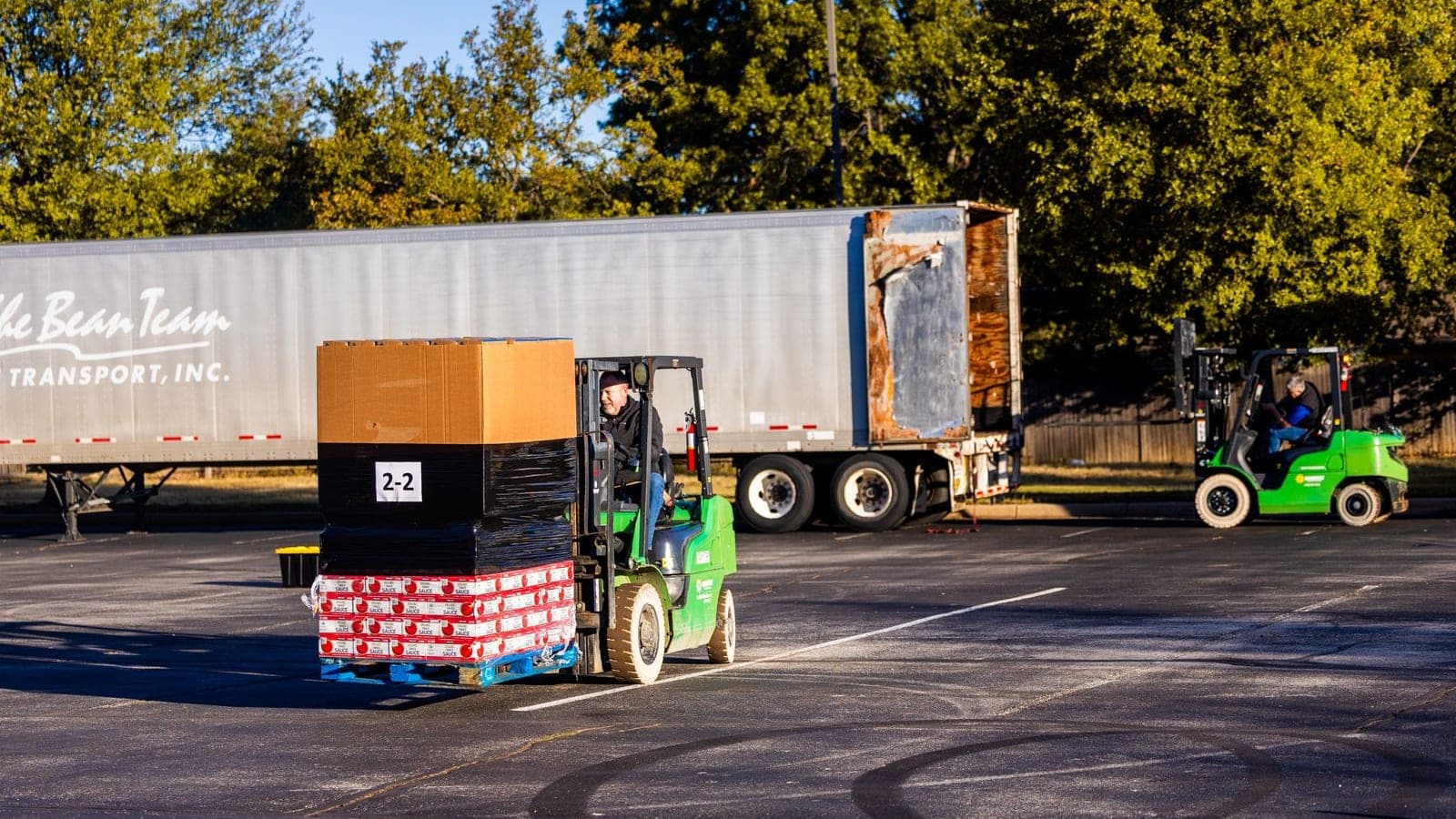
Drayage is the fee the show charges to move your freight from the loading dock to your booth space, store your empty crates during the show, and bring everything back to the dock at the end. It is billed by the official show contractor (Freeman, GES, and others), not by your booth vendor, and it is almost always the line item that surprises first-time exhibitors. It is also called "material handling."
Here is what you need to know so it does not blindside you.
Why drayage costs so much
You already paid to ship your booth to the venue. Drayage is a separate charge for the few hundred feet between the dock and your space, plus storing your empties. It feels like paying twice because, in a way, you are. The show controls the dock and the floor, so they control that movement, and it is priced by weight.
How drayage is calculated
Drayage is billed per hundred pounds (per CWT), with a minimum. The formula is roughly:
(your shipment weight, rounded up to the nearest 100 lbs) ÷ 100 × the CWT rate × any surcharges
Rates commonly run $95 to $250+ per CWT depending on the city, the venue, and whether your freight arrives at the advance warehouse or direct to show site. Most shows enforce a 200 lb minimum, so even a small shipment has a floor.
A worked example: a 600 lb booth at a $120 CWT rate is 6 × $120 = $720, before surcharges for off-target delivery, overtime, or special handling.
How to estimate yours before you commit
- Get your booth's shipping weight. Your booth vendor should give you this. At JET, we tell you the estimated weight as it lands at the warehouse so you can run the math.
- Find the CWT rate. It is published in the show's exhibitor service manual (the "exhibitor kit"). Look for "material handling."
- Do the math: weight ÷ 100 × rate. Round the weight up to the next 100.
- Add a cushion for overtime (freight handled outside show hours) and off-target delivery (arriving outside your assigned window).
How to keep drayage down
- Ship to the advance warehouse, not direct to show site, when the rate is lower (it usually is) and you want your freight guaranteed in place.
- Hit your target move-in window to dodge off-target surcharges.
- Pack tight and light. Weight is the whole bill. A modular rental that ships light beats a heavy custom crate every time.
- Consolidate shipments so you cross the minimum once, not three times.
The honest part
Drayage is the cost exhibitors hate most because it is largely outside your control once you are at the show. What you can control is the weight of what you ship and whether you understand the number before you sign up. A lighter modular rental is one of the simplest ways to keep it in check.
We put your estimated booth weight on every quote so you can calculate drayage from your show's rate before you commit. Request a quote. (jetexhibits.com/quote/request)
Quick answers
Is drayage included in my booth rental? No. Round-trip freight to the venue can be included (it is at JET), but drayage is charged by the show, not the booth vendor.
Who do I pay drayage to? The official show contractor listed in your exhibitor service manual, not your booth company.
Can I avoid drayage? Not entirely. You can lower it by shipping lighter, hitting your move-in window, and using the advance warehouse.
PLANNING A SHOW?
Tell us about your booth and we’ll come back within one business day. Request a quote.